
How to Stay Positive in Tough Times (Proven Strategies That Actually Work)
BloLife is unpredictable. No matter how well you plan, there will be moments when things don’t go your way—job loss, financial pressure, relationship issues, health concerns, or simply feeling lost. During these times, staying positive can feel almost impossible.
POSITIVE THINKING
M. ALI
4/29/20263 min read

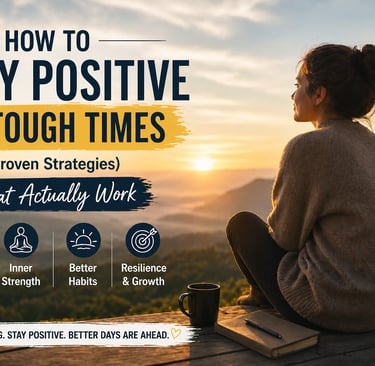
How to Stay Positive in Tough Times (Proven Strategies That Actually Work)
Life is unpredictable. No matter how well you plan, there will be moments when things don’t go your way—job loss, financial pressure, relationship issues, health concerns, or simply feeling lost. During these times, staying positive can feel almost impossible.
But here’s the truth: staying positive is not about ignoring your problems. It’s about building the mental strength to face them with clarity, resilience, and hope.
In this guide, you’ll learn practical, science-backed strategies to help you stay positive even when life feels overwhelming.
Why Staying Positive Matters (Even During Difficult Times)
A positive mindset doesn’t mean everything is perfect. It means you are choosing a healthier way to respond.
Read : 7 Secrets of Female Narcissists Most People Don’t Notice
Studies in psychology show that people with a positive outlook:
Handle stress better
Recover faster from setbacks
Make better decisions under pressure
Maintain stronger relationships
In simple terms, positivity doesn’t remove problems—it helps you deal with them more effectively.
1. Accept Reality Instead of Resisting It
One of the biggest mistakes people make during tough times is resisting reality.
You may think:
“This shouldn’t be happening to me”
“Why is my life so difficult?”
But resistance only increases stress.
👉 Acceptance doesn’t mean giving up. It means:
Understanding the situation
Letting go of denial
Focusing on what you can control
Ask yourself:
“What is one small thing I can do right now?”
2. Reframe Negative Thoughts
Your thoughts create your emotional experience.
When something goes wrong, your mind may automatically think:
“Everything is falling apart”
“I will never get through this”
This is called negative thinking bias.
How to fix it:
Replace extreme thoughts with balanced ones:
❌ “I can’t handle this”
✅ “This is difficult, but I will manage step by step”
❌ “Nothing is working”
✅ “Some things are not working, but I can improve”
👉 This simple shift builds emotional control.
3. Focus on What You Can Control
Tough times often feel overwhelming because you’re focusing on things outside your control.
Examples:
Economy
Other people’s behavior
Past mistakes
Instead, focus on:
Your actions
Your habits
Your mindset
👉 Control creates confidence.
4. Break Problems into Small Steps
Big problems feel scary. Small steps feel manageable.
Instead of:
“I need to fix my whole life”
Focus on:
One task
One improvement
One action
👉 Progress builds motivation.
5. Limit Negative Inputs
Your environment affects your mindset more than you realize.
If you constantly consume:
Negative news
Toxic social media
Complaining people
Your mind will naturally feel heavy.
Replace with:
Motivational content
Educational podcasts
Positive communities
👉 Protect your mental space.
6. Practice Daily Gratitude
Gratitude is one of the most powerful tools for positivity.
Even during tough times, there are things you can appreciate:
Your health
Supportive people
Small wins
Simple exercise:
Every day, write down:
3 things you’re grateful for
👉 This rewires your brain to focus on what’s working.
7. Take Care of Your Physical Health
Your body and mind are deeply connected.
When you feel low, your body often becomes inactive—and that makes things worse.
Simple habits:
Walk for 20–30 minutes
Drink enough water
Sleep 6–8 hours
Eat balanced meals
👉 A healthy body improves mental strength.
8. Talk to Someone You Trust
Keeping everything inside increases stress.
Talking to:
A friend
Family member
Mentor
Can help you:
Release emotions
Gain perspective
Feel supported
👉 You don’t have to handle everything alone.
9. Avoid Perfectionism
During tough times, don’t expect yourself to be perfect.
You might:
Feel unproductive
Make mistakes
Lose motivation
👉 That’s normal.
Focus on:
Progress, not perfection
10. Build a Positive Daily Routine
Routine creates stability during chaos.
Example routine:
Morning: 10 minutes reflection
Day: Focus on 1–2 important tasks
Evening: Gratitude + learning
👉 Structure reduces stress.
11. Remember: Tough Times Are Temporary
No situation lasts forever.
Think about your past:
Problems you once thought were impossible
Situations you eventually overcame
👉 This phase will pass too.
Final Thoughts
Staying positive in tough times is not about pretending everything is okay. It’s about choosing strength when things are not okay.
You don’t need to solve everything today.
Just take one step forward.
Then another.
That’s how progress happens.
❓ Frequently Asked Questions (FAQs)
1. How can I stay positive when everything is going wrong?
Focus on small actions you can control. Break problems into steps, avoid negative inputs, and remind yourself that situations change over time.
2. Is it normal to feel negative during tough times?
Yes, completely normal. The goal is not to eliminate negativity but to manage it and not let it control your actions.
3. Can positive thinking really change my life?
Positive thinking improves decision-making, reduces stress, and helps you stay consistent—all of which lead to better outcomes over time.
4. How long does it take to build a positive mindset?
It depends on consistency. With daily practice (gratitude, mindset shifts), you can see changes within a few weeks.
5. What are quick ways to feel better instantly?
Take a short walk
Talk to someone
Listen to uplifting content
Write down your thoughts
6. How do I stop overthinking during tough times?
Focus on action instead of analysis. Take small steps and avoid trying to solve everything at once.
7. Can motivation really help during difficult situations?
Motivation helps temporarily, but habits and mindset changes create long-term positivity.
Bonus
For more practical life tips, motivation, and personal growth strategies, explore more articles on Khalliballi and build a stronger mindset every day.
Read more: Daily Motivational Blogs